Two changes in the last year have quietly rewritten payroll for every employer in India. The four labour codes came into force on 21 November 2025 and changed how "wages" are defined. Then on 17 September 2026 the EPF wage ceiling was raised from ₹15,000 to ₹25,000 a month, the first increase since 2014. If your salary structure, PF set-up or gratuity workings still follow the old rules, your payslips may already be wrong.
This guide explains what changed in plain terms, what it does to PF, gratuity, bonus and overtime, how fixed-term employees are affected, and a practical checklist for your next pay run. It was last checked against official government sources on 2 November 2026. It is guidance for HR and finance teams, not legal advice, so confirm the details for your company with your accountant or counsel.
Where things stand
- The Government made the four labour codes effective from 21 November 2025. They replace 29 older labour laws, including the Payment of Wages Act, the Minimum Wages Act and the Payment of Gratuity Act
- The Ministry of Labour's FAQs say the old rules continue to apply until the new rules under each code are notified, to the extent they are in line with the codes. Draft rules were pre-published for comments on 30 December 2025, and at the time of writing we could not confirm that final central rules have been notified
- The revised definition of wages applies from 21 November 2025. The Ministry's FAQ says service before that date is calculated under the old Payment of Gratuity Act, 1972
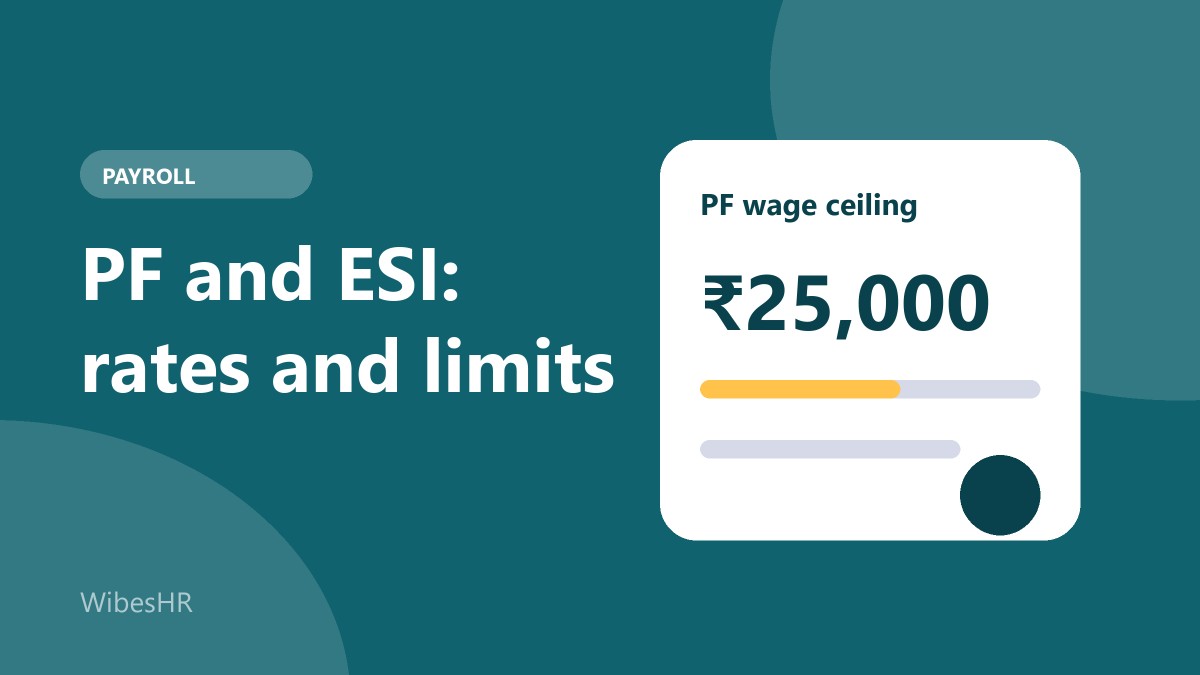
- The EPF wage ceiling rose to ₹25,000 a month from 17 September 2026, by a Gazette notification under the Code on Social Security, 2020
- State rules are still being aligned, so check the position in the states where you operate
The wage definition and the 50% rule
This is the change with the biggest effect on payroll. Many Indian salary structures keep "basic pay" low and put most of the package into allowances such as special allowance, house rent allowance or conveyance. That kept PF, gratuity and bonus small, because those were calculated on basic pay.
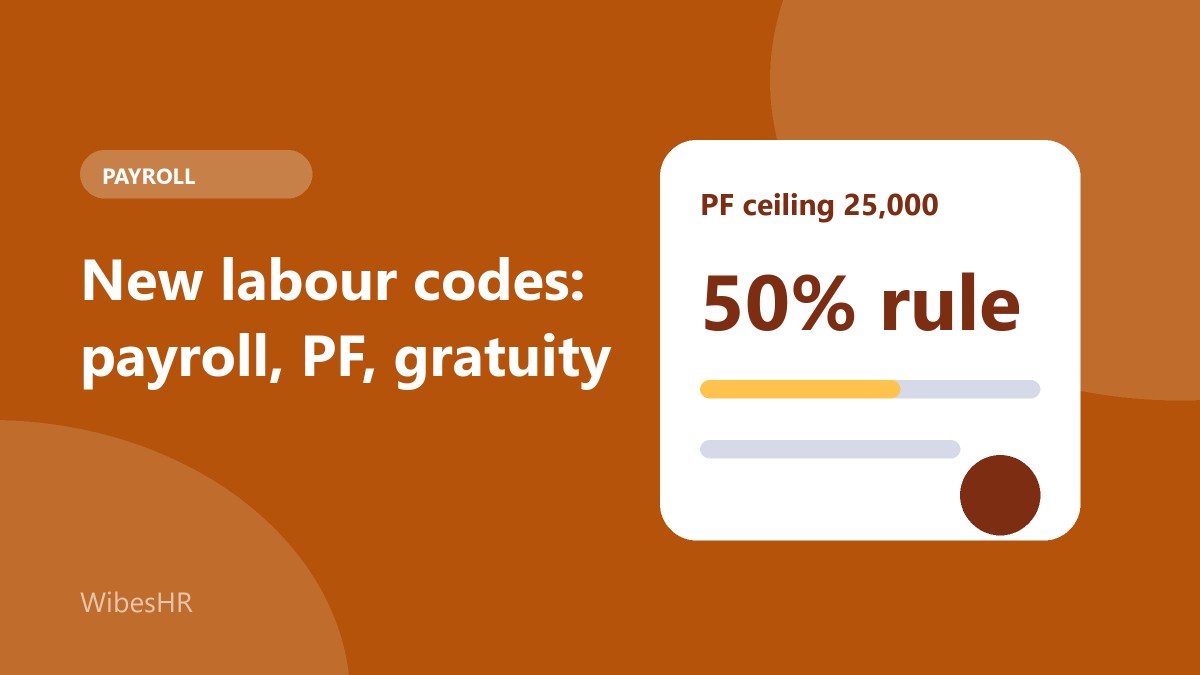
The Code on Wages defines wages as basic pay, dearness allowance and retaining allowance, plus the part of other allowances that goes beyond a limit. The rule is that if the allowances and benefits outside basic, dearness allowance and retaining allowance are more than 50% of total remuneration, the excess is added back and counts as wages. In the Ministry's own FAQ worked example, with total pay of ₹76,000, the allowances above ₹38,000 are added back to wages.
A worked example
| Component (per month) | Amount |
|---|---|
| Basic pay | ₹24,000 |
| House rent allowance | ₹12,000 |
| Special allowance | ₹44,000 |
| Total remuneration | ₹80,000 |
| Allowances (outside basic and dearness allowance) | ₹56,000 |
| 50% of total remuneration | ₹40,000 |
| Excess added back to wages | ₹16,000 |
| Wages under the new definition | ₹24,000 + ₹16,000 = ₹40,000 |
Under the old way, wages for most purposes were ₹24,000. Under the new definition they are ₹40,000. This example uses round numbers to show the logic and ignores items that the Act treats separately, so use the Act and the Ministry FAQs for your own structure.
What counts in the 50% test
- The Ministry's FAQ of 16 March 2026 says employer PF and pension contributions and statutory bonus are taken into the 50% calculation, while gratuity, ESI and other retirement benefits are not
- Overtime allowance also counts in the calculation, and any amount above 50% is added back to wages
- Remuneration in kind counts as wages only up to 15% of total wages
What it does to PF, gratuity, bonus and overtime
Provident fund
PF is calculated on wages as the codes define them, up to the wage ceiling. Since 17 September 2026 the ceiling is ₹25,000 a month instead of ₹15,000. Two things follow:
- Employees who earn between ₹15,000 and ₹25,000 become eligible for mandatory EPF, EPS and EDLI cover, and the government estimates that more than 51 lakh workers are newly covered
- The maximum employer pension (EPS) contribution at 8.33% rises from ₹1,250 to ₹2,083 a month
EPFO's regional offices have told employers to enrol the newly eligible workers, file the ECR on time and keep Aadhaar and KYC details linked. A month that falls partly before and partly after 17 September needs care, because the old and new ceilings both apply to different days.
Gratuity
Gratuity is still 15 days' wages for each year of service. The difference is the wage it is based on. Traditionally the monthly figure is worked out as last drawn wages multiplied by 15 and divided by 26, for each completed year. With the structure above:
- Old wages ₹24,000: ₹24,000 x 15 / 26 = about ₹13,846 for each year of service
- New wages ₹40,000: ₹40,000 x 15 / 26 = about ₹23,077 for each year of service
The liability on your books for service after 21 November 2025 is therefore higher, even though the formula did not change. Your finance team should review the provision.
Bonus and overtime
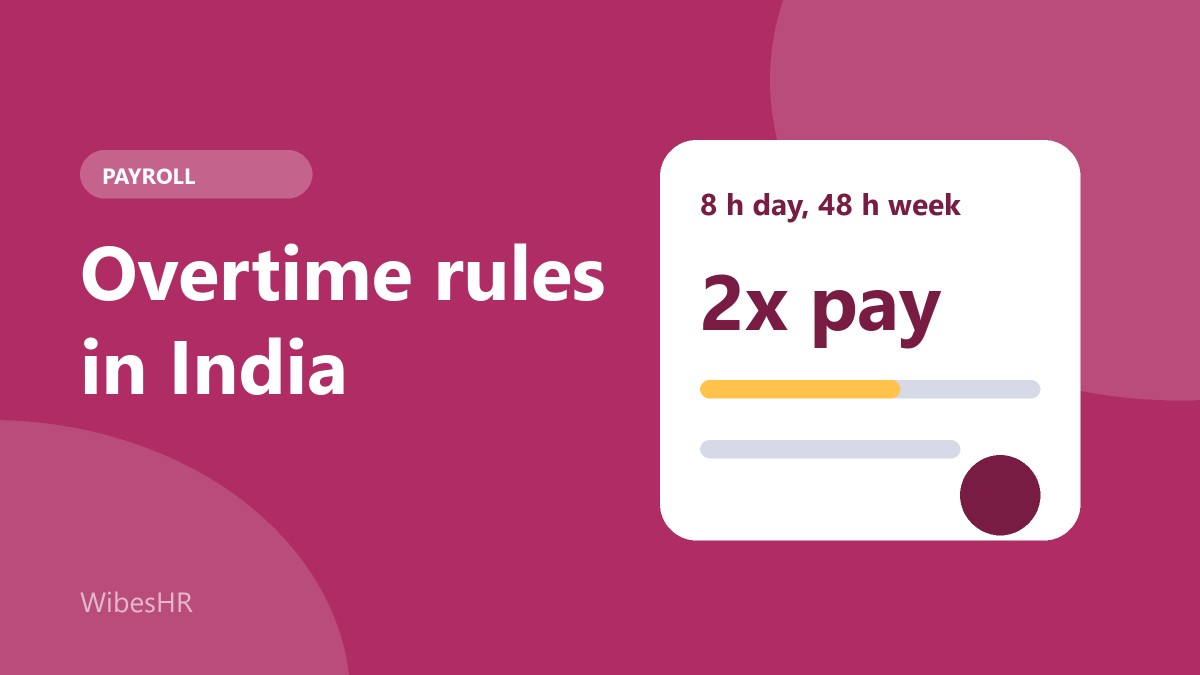
The Ministry says the wider wage base raises PF, gratuity and bonus amounts. For overtime, the Code on Wages requires payment at not less than twice the normal rate of wages for work beyond normal working hours.
Fixed-term employees
Fixed-term employees now qualify for gratuity after one year of continuous service, not five. When a fixed-term contract expires, the five-year condition does not apply, and the gratuity is paid pro rata for the period served. If you hire people on fixed-term contracts, or pay them a salary and a stipend, review how those packages are structured and what you owe at the end of the contract.
A payroll checklist for your next pay run
- List every salary structure in use and calculate what share of total pay is basic pay plus dearness allowance. Anything below 50% needs a decision
- Run a test pay run on the new definition and compare PF, gratuity accrual and net pay with the old one, employee by employee
- Check which employees are newly covered by the ₹25,000 PF ceiling and enrol them, file the ECR and update their details
- Decide whether to restructure salaries (raise basic pay) or accept higher PF and gratuity costs, and tell employees early because take-home pay can change
- Update the gratuity provision, including fixed-term staff after one year of service
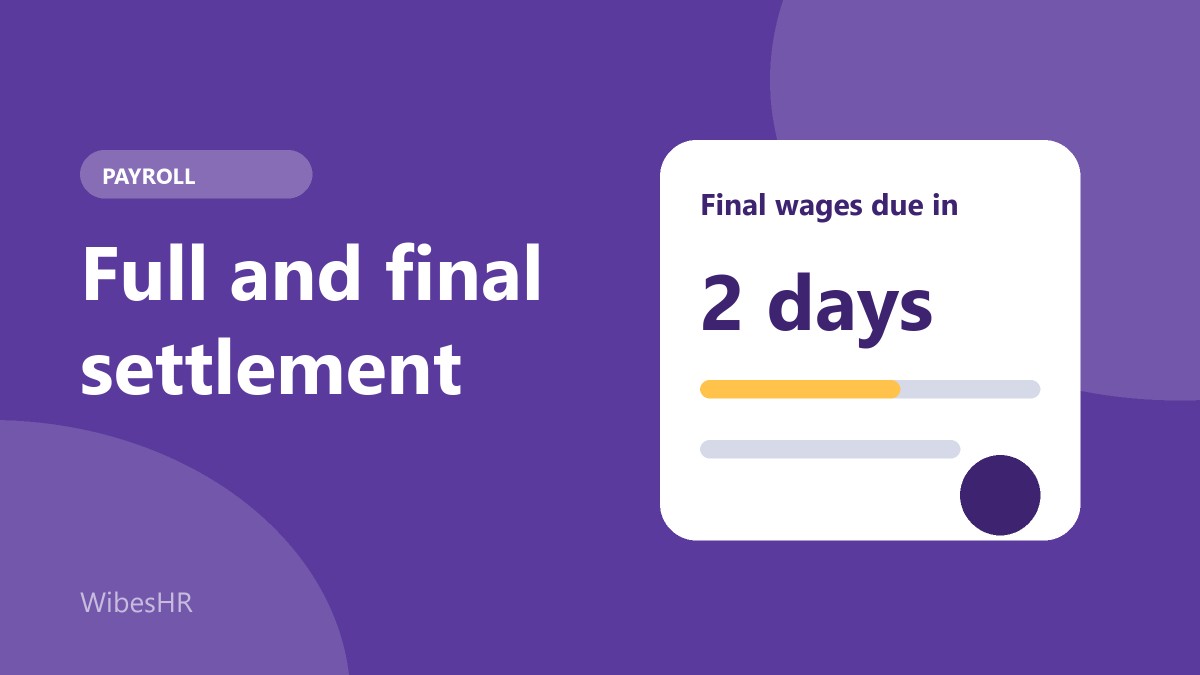
- Pay final dues quickly: under the Code on Wages, wages are payable within two working days after resignation, removal or dismissal, unless the government sets a different period
- Review overtime rules and rates, and record the approval trail
- Check the state rules and the final central rules when they arrive, and keep a note of the date you last checked
Mistakes employers are making
- Keeping the old structure and assuming nothing changed because "the rules are not final yet". The wage definition applies from 21 November 2025
- Calculating PF on ₹15,000 after 17 September 2026
- Ignoring fixed-term employees when working out gratuity
- Making salary changes without telling employees and without recording the reasons
- Treating a vendor's calculator as legal advice. Ask for the rule it is using and the date
How WibesHR handles this
The WibesHR HR and payroll module has an India payroll pack where provident fund, ESI, professional tax and income tax are switched on only when you choose. For provident fund, each pay head can be marked as counting as wages or as excluded, and the excluded part counts only up to 50% of total remuneration from 21 November 2025, as the Code on Wages defines it. The ₹25,000 ceiling applies from 17 September 2026, and a month that straddles that date is split by days between the old and the new ceiling. An employee can be marked as "PF on full wage". Income tax follows the FY 2026-27 slabs under the new regime.
The Payroll > Rates screen shows every rate used, from which date, and where it came from. The shipped rates were checked against secondary sources and have not been reviewed by a tax professional, so your accountant should confirm them before your first run.
To be clear about the limits: WibesHR does not calculate gratuity or full and final settlement yet, so you will need a separate workings sheet for those. It does not restructure salaries for you. The overtime module supports your own policy and manager approval, and the labour code overtime rate should be checked in your policy. Plans are priced per employee per month, and the 7-day free trial includes every feature and needs no payment details, so you can compare a pay run on the old and new rules before you commit.
See also: how HRMS pricing works and how to choose an HRMS for 50 employees.
Frequently asked questions
When did the new labour codes come into force?
The Government made all four labour codes effective from 21 November 2025. The revised definition of wages applies from that date, though the final rules under the codes are still being notified and older rules continue to apply meanwhile.
What is the 50% wage rule?
If allowances and benefits other than basic pay, dearness allowance and retaining allowance exceed 50% of total remuneration, the excess is treated as wages. That raises the amount on which PF, gratuity and bonus are calculated.
What is the new EPF wage ceiling?
₹25,000 a month, up from ₹15,000, effective 17 September 2026. Employees earning between ₹15,000 and ₹25,000 become eligible for mandatory EPF, EPS and EDLI cover.
Are fixed-term employees entitled to gratuity?
Yes. They qualify after one year of continuous service, and when the contract ends the gratuity is paid pro rata for the period served, without the usual five-year condition.
Do I need to change my salary structure?
If basic pay plus dearness allowance is below 50% of total remuneration, the excess counts as wages anyway, so your PF and gratuity costs rise whether or not you restructure. Whether to raise basic pay is a business and tax decision, so discuss it with your accountant.
Is this legal advice?
No. The rules are still being finalised and states are aligning theirs. Use this guide to understand the changes and check the details with the Ministry of Labour and Employment, the Gazette of India and your adviser.